
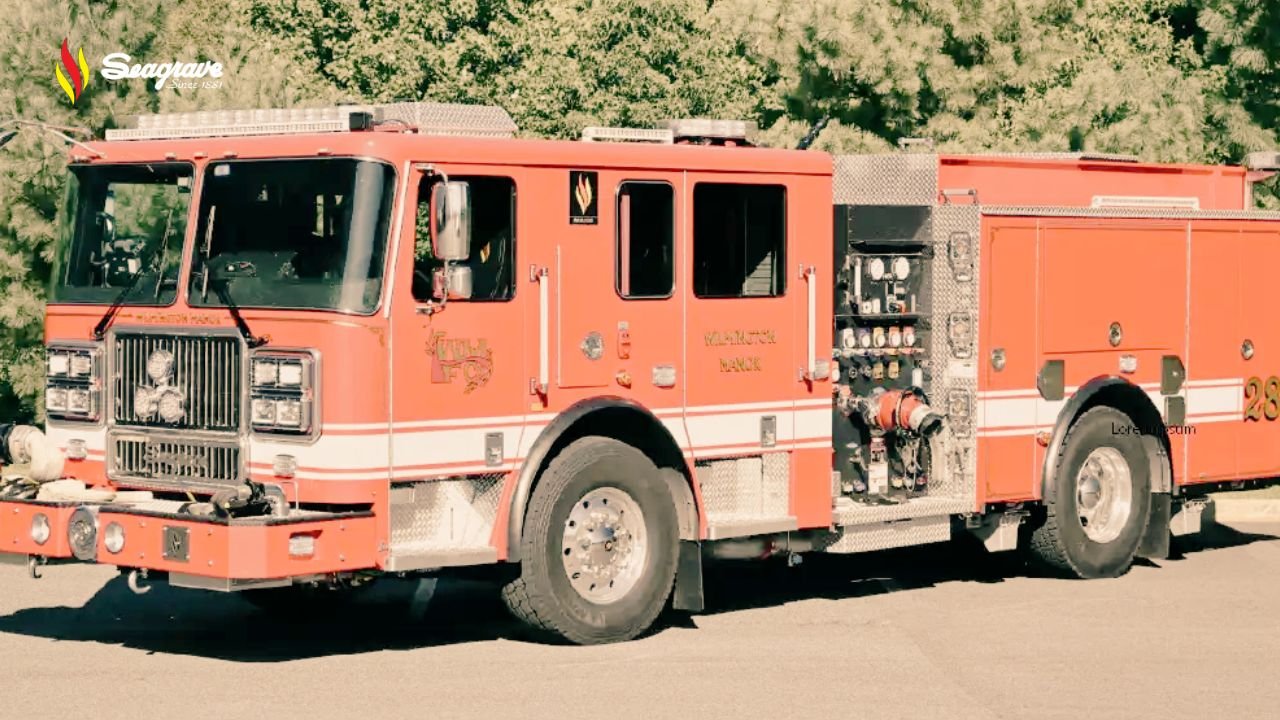
When a fire department or municipality depends on a single manufacturer for its entire apparatus fleet, asking “will this company still be around?” is not paranoia. It’s basic procurement due diligence.
Seagrave Fire Apparatus has been the subject of that question more than once. Ownership changes, industry consolidation, and online speculation have all contributed to uncertainty about the company’s future.
So let’s cut through the noise. This article looks at Seagrave’s current operational status, credit profile, recent expansion activity, and ownership history — using documented sources — to give you a straight answer.
What Seagrave Fire Apparatus Actually Does
Seagrave is one of the oldest fire apparatus manufacturers in the United States. Founded in 1880 and headquartered in Clintonville, Wisconsin, the company builds pumpers, aerial ladders, tractor-drawn aerials, platform aerials, and rescue units for municipal, commercial, and military customers.
Its manufacturing operations span two facilities: Clintonville, WI and Rock Hill, SC. The company also maintains offices in Jessup, MD and East Brunswick, NJ. According to its PitchBook profile, Seagrave employs approximately 122 people.
Seagrave holds authorized GSA vendor status, meaning it is an active, approved supplier to the U.S. federal government. That status requires ongoing compliance — it’s not something a company on its way out maintains.
The company also refurbishes and upgrades older Seagrave apparatus, including NFPA compliance updates. That’s a detail worth noting for any fire department worried about long-term parts and service support.
No Bankruptcy, No Default — What the Credit Record Shows
Here is the most direct answer to the closure question: there is no documented record of Seagrave filing for bankruptcy or defaulting on its financial obligations.
Credit research from Martini.ai puts Seagrave’s probability of default at 0.400% — roughly 4 chances in 1,000 that the company defaults within a year. For a private industrial manufacturer operating in a cyclical industry, that is a low figure.
The same credit profile assigns Seagrave a B4 rating and describes the overall picture as “moderate risk with positive credit momentum.” That language is not a warning sign. It reflects the normal exposure that comes with capital-intensive manufacturing — sensitivity to economic cycles, contract timing, and material costs.
Think of it this way: a 0.400% default probability is not a red flag. It is the kind of number a city procurement officer should see as a green light, not a reason to stall a contract.
“Moderate risk” does not mean “about to close.” It means the company operates in an environment where macro conditions matter — which is true of virtually every manufacturer in this space.
Recent Expansion Plans Point Away From Closure
If Seagrave were quietly winding down, you would expect to see the opposite of what’s actually happening.
According to Fire Apparatus Magazine, Seagrave sought a conditional use permit from the Wausau, Wisconsin Plan Commission to open a new facility dedicated to building fire truck cabs. The target opening date was December of the reported period. A municipal permit application is a public record — this isn’t a rumor or a press release. It’s a formal step in a real expansion plan.
This isn’t the first time Seagrave has scaled up in Wisconsin either. After the September 11 attacks, Seagrave produced 54 fire trucks to help rebuild New York City’s fire department fleet — a significant production run that demonstrated both the company’s manufacturing capacity and the deep trust large municipal customers place in the brand.
On the sales and distribution side, Seagrave’s Facebook page has featured active posts recruiting new dealers, inviting people to “join the Seagrave legacy” and listing direct sales contacts. That kind of outreach signals investment in growth, not preparation for shutdown.
Companies that are going out of business don’t apply for facility permits. They don’t recruit dealer networks. They don’t ramp up manufacturing capacity. Seagrave is doing all three.
The Acquisition That Sparked Some of the Confusion
One likely source of closure speculation is Seagrave’s acquisition by James Hebe and a group of investors, which was reported by Firehouse Magazine. Financial terms of the deal were not disclosed — which is typical for private company M&A transactions.
Ownership changes in manufacturing companies almost always generate rumors. People assume new owners will strip assets, consolidate operations, or shut the brand down. Sometimes that happens. Often it doesn’t.
In this case, Hebe comes from a background in the truck and apparatus industry, and the acquisition was framed publicly as a continuation of the Seagrave brand — not a prelude to liquidation. The subsequent expansion activity in Wausau and the active dealer recruitment are consistent with that framing.
It’s worth understanding the distinction here. A private equity buyout focused on short-term extraction tends to look very different from a strategic acquisition by someone with industry expertise. Cost-cutting, facility closures, and reduced headcount would be the signals to watch for. None of those have been documented at Seagrave.
How to Monitor a Private Company’s Health
Seagrave is a private company, which means it doesn’t file public earnings reports. That makes independent verification harder — but not impossible. Here are practical steps any municipality or procurement team can take:
- Check business databases. IncFact, PitchBook, and NAICS all maintain active profiles for Seagrave. If the company ceases operations, those records will reflect it.
- Monitor local news. Clintonville, Wausau, and Rock Hill are all small enough markets that a plant closure or major layoff would generate local news coverage. Set a Google Alert for “Seagrave Clintonville” or “Seagrave Rock Hill.”
- Watch for bankruptcy filings. Chapter 7 or Chapter 11 filings are public court records. PACER (the federal court system’s online database) allows anyone to search for filings by company name.
- Look for sudden communication gaps. An active website, phone lines, and social media presence are low-tech but useful indicators. If Seagrave’s website goes dark and calls go unanswered, that’s worth escalating.
Right now, none of those warning signs are present. Seagrave’s website is active, its LinkedIn profile lists multiple operational locations, and its social media is posting recruitment content. That’s a functioning business, not one in distress.
What Would Happen If Seagrave Did Close?
This is a fair question for any fire department running a Seagrave fleet, and it’s worth addressing directly — not because closure looks likely, but because good procurement planning accounts for worst-case scenarios.
If Seagrave were to shut down, the immediate concerns would be parts availability and service support. Fire apparatus has a long service life — 20 to 30 years is common — so departments running older Seagrave trucks would need to locate alternative parts suppliers or aftermarket vendors.
Some apparatus manufacturers and third-party vendors do support legacy fleets from discontinued brands, but the availability and cost vary significantly. Departments with large Seagrave fleets would be wise to maintain a relationship with their current Seagrave service contacts and keep records of critical parts specifications, regardless of what happens with the company long-term.
Again, current evidence does not suggest this scenario is approaching. But planning for it is just sensible fleet management.
The Bottom Line
Based on available, documented evidence, Seagrave Fire Apparatus is not going out of business.
The company has no recorded bankruptcies or defaults. Its probability of default is low. It is actively expanding manufacturing capacity in Wisconsin. It is recruiting dealers. It holds federal GSA vendor status. And it continues to operate facilities across multiple states.
The confusion likely stems from a combination of factors: a private acquisition that generated speculation, a “moderate risk” credit label that sounds worse than it is, and the general anxiety that comes with depending on a single supplier for mission-critical equipment.
For procurement officers, city managers, and fire chiefs evaluating Seagrave as a long-term supplier, the evidence points toward a stable, operational company — not one in financial trouble. If you want to stay informed about business developments like this one, AIM Business Mag covers company profiles, credit analysis, and industry news in plain language.
Keep monitoring the signals outlined above. But as of the most recent available data, there is no credible basis for the claim that Seagrave is closing its doors.
Also Read: